

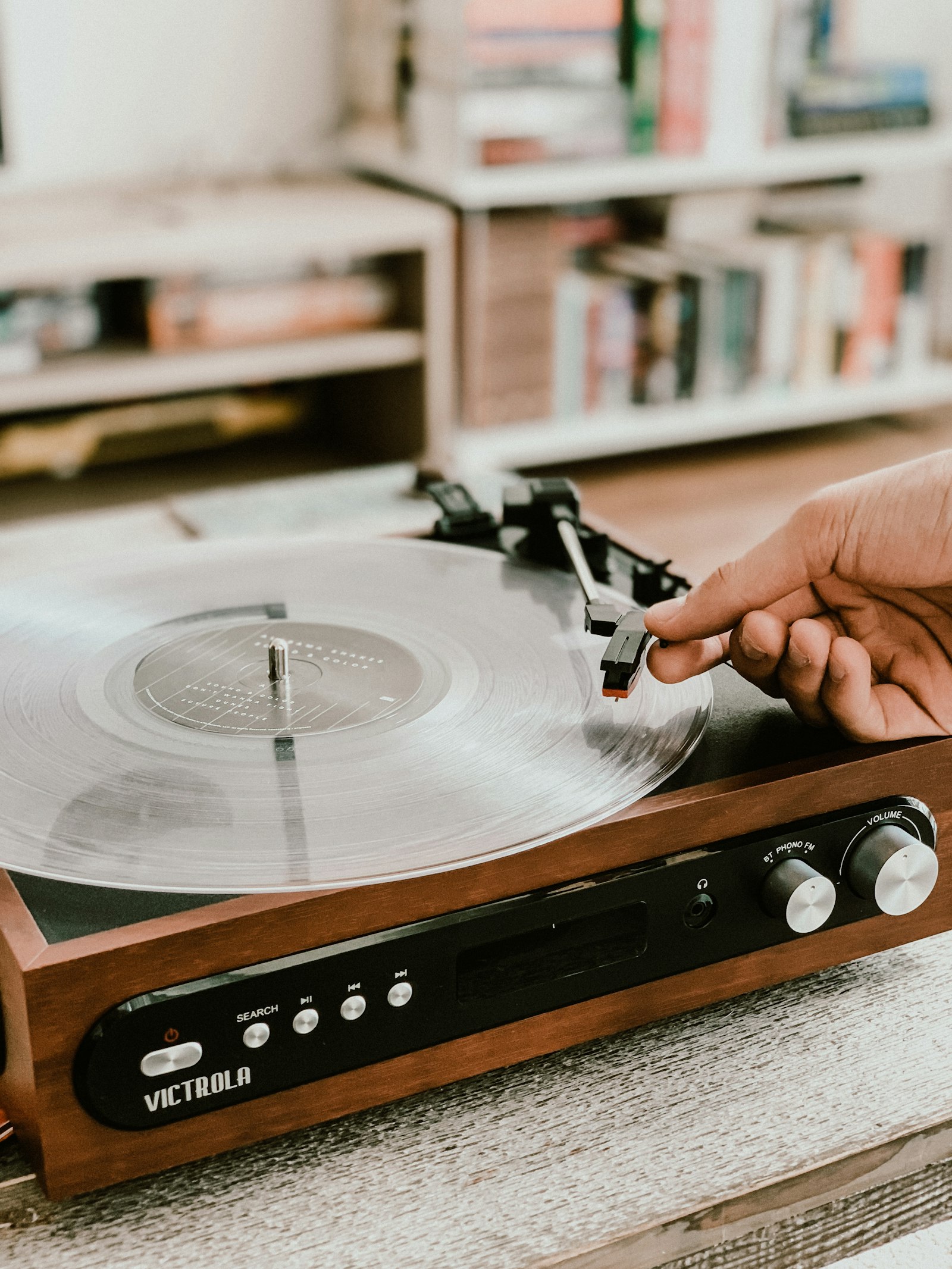

I was a DJ in Miami in the early 90s. That means I lived in the record stores, in the dark clubs, in the bootleg tapes and the vinyl that felt like secret documents. I had tastes. Obsessions. A stack of crates that became the currency of my world.
Most of those records are gone. Sold, lost, given away. But some of them I kept. Not because they’re rare or they’ve increased in value. I kept them because they still hold up. They sound as true to me now as they did when I first heard them spinning over the turntable at Space or Crobar or in my bedroom at 3 a.m. working out transitions.
These are the ones that got me through, and why they still matter.
Mariah Carey – "Emotions" (1991)
This record gets left out of the conversation because people want to reduce Mariah to a ballad artist or a vocal gymnast. “Emotions” is neither. It’s a funk and house record with a singer who understands architecture. Every song has a foundation and a build. The production is meticulous. The rhythms are serious.
I bought this record because the A&R people at the clubs were playing cuts off it, and I heard something in the layering that made sense to me as a producer. “Till the End of Time” is the track that broke through, but the whole album is constructed like a conversation. The vocal runs that she’s famous for don’t feel like showing off; they feel like they’re part of the rhythm section.
By my late 20s, I understood that this record wasn’t just pop. It was a masterclass in how to make dance music that didn’t need a spoken word intro to announce itself. It was sophisticated without being pretentious. Still is.
De La Soul – "3 Feet High and Rising" (1989)
I don’t remember where I first heard this. It wasn’t a record store discovery. It was in a mix someone made, or a friend played it, and I was hooked by the opening track, the spoken-word bit about the Plug and the way the production just drops under it like someone’s letting out a breath.
This album taught me that hip-hop could be playful and smart at the same time. The samples are creative but not showy. The production feels like a conversation between the beats and the voices. “Me Myself and I” is the obvious track, but the deeper cuts are where the real work is. “Magic Number”, “Say No Go”, “The Magic Number” again, different version.
What kills me about this record now is how unhurried it feels. Everything has space to breathe. The rappers aren’t rushing. The production isn’t trying to prove anything. It’s just people making music because they had something to say, and they knew how to say it.
Prince – "Parade" (1986)
I was 21 when this came out. I wasn’t paying attention yet. But by the time I was deep in Miami, the deeper cuts from “Parade” were showing up in DJ sets, and I understood: Prince had made a record that worked everywhere. In a club, in a bedroom, in a car, in your headphones.
“Kiss” is the hit. But “Anotherloverholenyohead” is the song that made me understand what layering actually meant. The guitar work, the organ underneath it, the vocal harmonies, the production that sounds like it’s happening in the most expensive studio but also like it could be happening in someone’s garage. “Sometimes It Snows in April” might be the saddest song he ever made. The restraint in it kills me.
By my late 20s, I’d learned that Prince was a producer first and a virtuoso second, and that’s why his records worked. He understood space and restraint. He knew when to leave things out.
Stevie Wonder – "Innervisions" (1973)
I came to this late in my 20s, not in Miami clubs but in a record store, a used copy, and I was struck by how dense and complex the production is and how human it all still sounds. “Higher Ground” is the famous one, but the whole record is working on you. “Don’t You Worry ‘Bout a Thing” is a masterpiece of arrangement. The way the bassline moves, the way the organ sits under the synths.
This record sounds like Stevie understood something fundamental about how songs actually make you feel. Not manipulative. Just aware. The production is complicated, but the emotion is simple. And that balance is what makes it timeless.
Portishead – "Dummy" (1994)
I discovered this toward the end of my 20s, after the club scene was already starting to shift for me, and it felt like the future. Not in a futuristic sense, but in the sense that it sounded like what music could become if people took the darkness seriously, if they didn’t have to make you dance to make you move.
The production is impeccable. The vocals are perfectly placed. The strings and samples and drums all have weight. “Glory Box” is a song I come back to probably twice a year just to remind myself what restraint in production actually sounds like. Geoff Barrow and Adrian Utley built something here that sounds like it could have been made in 1950 or 2050, and that’s the highest compliment I have for any record.
The Through Line
What I notice about all of these records now is that they’re not trying to do anything except be exactly what they are. They’re not chasing trends. They’re not trying to prove technical mastery. They’re people with something to say and the skill to say it clearly.
As a DJ, I learned that the records that lasted were the ones that had something underneath the surface. A good bassline won’t carry a mediocre song, but it will make a good song undeniable. A perfect vocal line won’t fix bad production, but it will make you forgive a lot of things that aren’t perfect.
These records all have that quality. They’re not perfect. They’re better than perfect. They’re honest. And that’s why I still pull them out sometimes, put the needle down, and remember why I fell in love with music in the first place.