

I don’t drink coffee. I’m 51 years old and I’ve never been a coffee drinker. This fact surprises people more than it should.
It’s not a moral stance. It’s not a health manifesto. It’s not something I’m trying to convince other people to do. It’s just a choice I made in my 20s that never changed, and now it’s just who I am. But people take it as a personal indictment, like I’m implying they should also not drink coffee, which I’m not. I’m just saying what works for me.
The Why
Here’s the thing about coffee: it’s a drug. Not a metaphorical drug. An actual stimulant that affects your central nervous system. Caffeine is no different than nicotine in that way. Both are deeply normalized. Both are socially acceptable. Both are easy to build a dependency on. And both are fine if you’re intentional about it.
The problem is that most people aren’t intentional about coffee. They drink it because it’s 7 a.m. and there’s coffee, not because they actually want or need a stimulant. They drink it because everyone else does and it feels weird to order anything else. They drink it because their body has built a tolerance and they need it to function at baseline, which is a kind of dependency that doesn’t feel like dependency because it’s so normalized.
When I was in my early 20s, I tried coffee. I drank espresso shots at clubs. I’d get wired, my hands would shake, my anxiety would spike. It felt like artificial urgency, like my body was being forced to perform a function it wasn’t ready for. I didn’t like the feeling. So I stopped.
People said I’d get used to it. I didn’t want to. People said I’d need it eventually. I never did. People said I’d change my mind. I haven’t.
The honest reason I don’t drink coffee is that I don’t like how it feels. It’s not a cleaner, better choice. It’s just not my choice. But because I never built the dependency, I also never have to deal with the midday crash, the afternoon slump that requires another cup, the jitteriness, the dependency on a substance to feel normal.
What I Do Instead
When I need to wake up or need a boost in energy or clarity, I have other tools.
Water. This sounds dumb, but it’s not. Most of the time when you think you need caffeine, you actually need to drink a glass of water. Your body runs on water. If you’re dehydrated, you’re foggy. I wake up and drink a big glass of water before anything else. It’s almost a ritual. The effect is real. You feel clearer in two minutes.
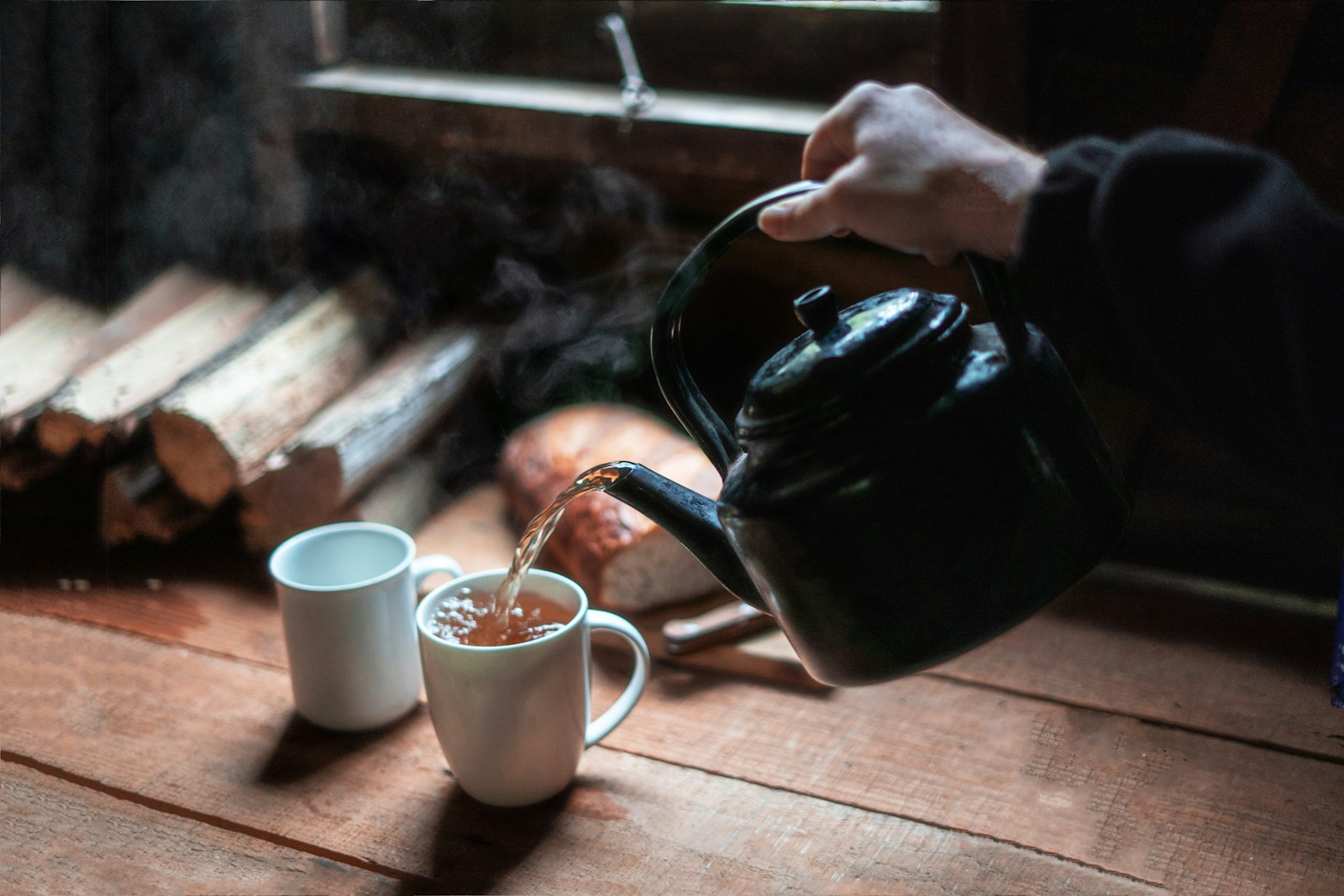
Tea. If I want something warm and flavorful in my hand, I drink tea. Black tea, green tea, herbal tea depending on the time of day. Black tea has some caffeine, not much. Enough to be a placeholder if I actually did want a stimulant, but not enough to make me jittery. It’s the feel of the ritual without the overwhelming effect.
Movement. If I’m actually tired at 3 p.m., I go for a walk. Or I do some pushups. Or I put on a song and move around for five minutes. Real energy comes from movement, not from stimulation. The wake-up is different. It comes from your body actually activating, not from your nervous system being forced awake.
Food. Actual calories. If I’m running low, I’ll eat a good meal or a snack. Protein and fat and fiber will give you sustainable energy. It takes longer than caffeine. It doesn’t feel like a jolt. But it actually lasts, and it doesn’t come with a crash.
Time. Sometimes you’re just tired because you need more sleep. I’ve made peace with that. If I’m dragging at 4 p.m., I don’t force myself awake with stimulants. I accept that I’m tired and I go to bed earlier. That might sound lazy. It’s actually efficiency. There’s no amount of coffee that replaces sleep.
The Deeper Point
Coffee culture is interesting because it’s one of the few drug dependencies that’s completely socially acceptable. A lawyer will drink six cups of coffee a day and call it productivity. Someone who drinks alcohol at the same frequency would be called an alcoholic. Both are dependencies. Both affect your body and your mood. The difference is just culture.
What I’ve noticed about people who drink a lot of coffee is that many of them describe coffee as essential. “I’m not human until I’ve had my coffee.” “I can’t function without it.” These are the statements of someone who’s dependent on a substance. But because everyone else is saying it, and because coffee is legal and available and encouraged, it doesn’t read as dependency.
I’m not judging it. I’m just observing it. And I’m glad I never got on that treadmill.
What Actually Changed
The thing that actually changed for me is energy. Without the caffeine peaks and crashes, my energy is more stable. I don’t have the 10 a.m. buzz followed by the 2 p.m. crash. I don’t have the afternoon jitteriness. I sleep better because there’s no stimulant in my system at 3 p.m. affecting my sleep at 10 p.m.
Do I ever feel like I want coffee? Sure. I’ll be in a coffee shop and something smells amazing and I’m curious what it would taste like. But I don’t want the effect. I don’t want to be jittery and then crashed out. I just want the experience.
And that’s fine. I can not have something and still appreciate that other people enjoy it. I can not drink coffee and not be smug about it or try to convince other people to change. It’s just a choice.
But I’ll say this: if you’re someone who says you can’t function without coffee, you might want to ask yourself whether coffee is actually necessary, or whether you’ve just never tried to function without the dependency. Because once you do, you realize that you’re probably fine. That your body can wake up on its own. That you don’t need a drug to be a normal person.
For some people, coffee is worth the dependency. It is. But for me, it never was. And I’ve never regretted that choice.