
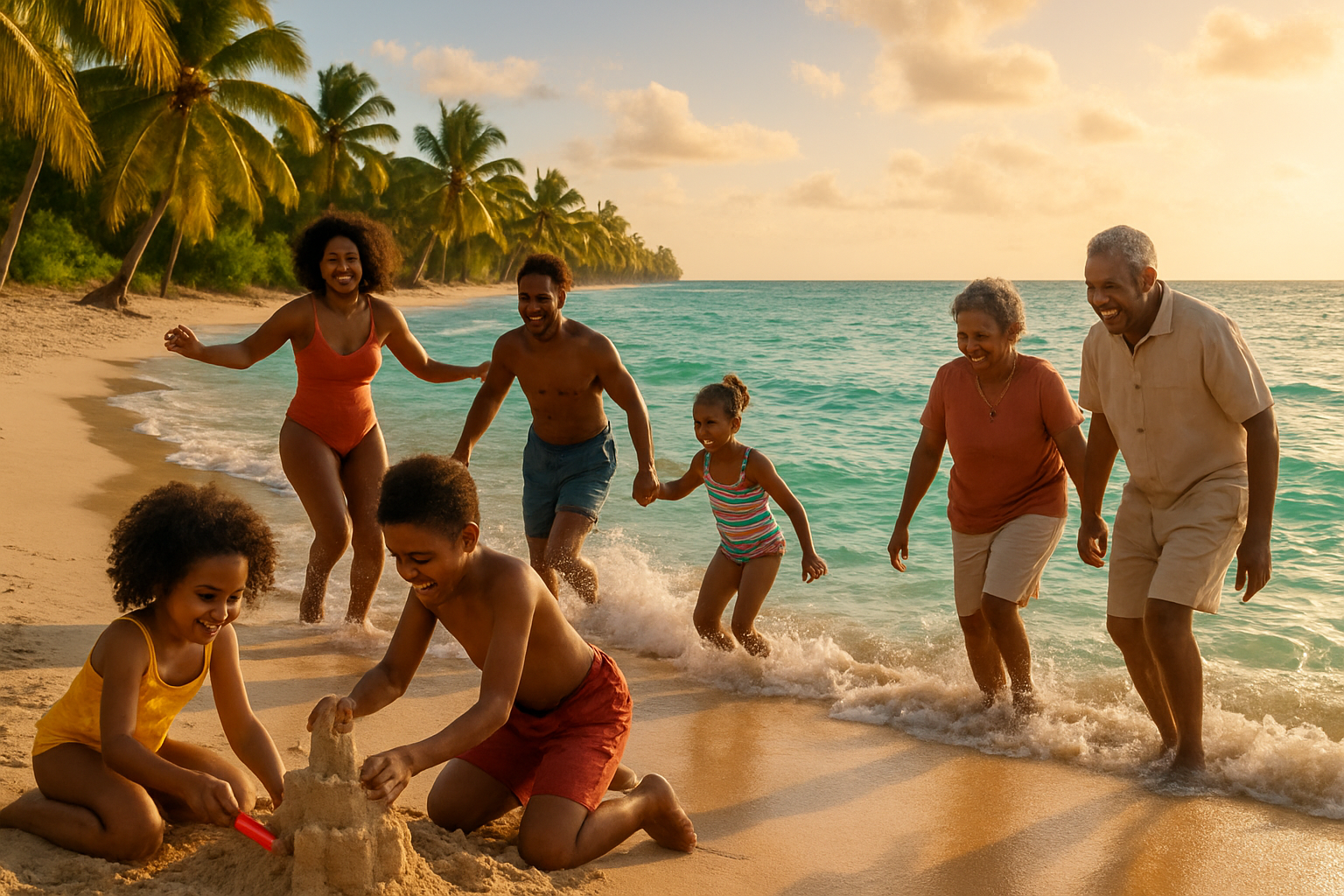

Not all Caribbean islands are created equal when you are traveling with kids. Some are paradise. Others are expensive headaches with mediocre chicken tenders and nothing to do for anyone under 40. This guide is my take on what matters for families: beaches that will not terrify toddlers, resorts that give parents a real break, flight logistics that do not require a mortgage, and enough to do that nobody asks “what are we doing today?” seventeen times before breakfast.
Two notes up front. This is general guidance, not a report from a trip I took. Details like resort names, prices and ferry schedules change, so confirm the specifics before you book. And the right island depends on your family, so treat this as a shortlist, not a verdict.
Turks and Caicos: The Gold Standard for Calm Beaches
Grace Bay Beach on Providenciales (locals and visitors say “Provo”) is famous for a reason. The water is calm, very clear and shallow enough that little kids can wade out a good distance while you keep an eye on them without panic. If your priority is a guaranteed gorgeous beach with minimal drama, this is the pick.
Why it works for families
- Most families stay on Provo, and resorts there tend to offer practical amenities: full kitchens, in-unit laundry and family-size suites, not just pretty lobbies.
- Family-focused all-inclusive resorts on the island offer kids’ clubs, water parks and multiple dining options, so you are not stuck at one buffet every night.
- Flights from many U.S. cities are relatively short. Check your own departure city, since direct service varies by season.
- English is widely spoken, and the U.S. dollar is the currency, which takes a lot of friction out of a trip with tired kids.
The catch: it is expensive. It is not “remortgage the house” expensive for everyone, but it sits at the pricier end of the region. If you want to keep costs down, look at condos with kitchens and travel in shoulder season.
Aruba: The Reliable Workhorse
Aruba sits well south of the main hurricane belt, and storms are rare there compared with most of the Caribbean. That makes it a strong candidate if you want to book with confidence during months when other islands are a gamble. Rare is not never, so it still makes sense to have flexible or insured bookings.
Beaches
- The western side has Palm Beach and Eagle Beach: calm water, white sand and room to spread out.
- The eastern side is rugged and dramatic, better for older kids who like tide pools and blowholes.
Where to stay: Aruba has a strong resort scene, including well-known hotel chains with kids’ clubs, multiple pools and easy beach access. Some have lazy rivers, which is a real advantage when you want a couple of quiet hours. Read recent reviews for the property you like.
Getting around: The island is small enough to see in a day or two without feeling overwhelmed. A rental Jeep or an organized tour can take you to the Natural Pool, the California Lighthouse and a few quieter beaches in a single loop. The scenery changes often, which helps keep kids engaged.
Eating: Beyond the resorts you will find casual places for pizza, burgers and fresh fish. If your lodging has a kitchen, buying breakfast supplies at a local grocery store and saving the dining budget for dinners out is a good strategy.
Pro tip: Aruba is windy. If you have a rental condo, packing cubes help keep beach gear organized. Nothing is worse than hunting for goggles in four different suitcases while everyone is melting down.
Cayman Islands: Safe, Clean and Surprisingly Kid-Friendly
Grand Cayman does not get enough credit as a family destination. Its reputation as a financial hub and cruise stop hides the fact that it has one of the region’s best beaches and a lot to do with kids.
- Seven Mile Beach is the main draw. The sand is soft, the water is generally calm, and there are enough resorts and beach bars that you never feel isolated.
- Turtle experiences. The Cayman Turtle Centre is a popular stop where kids can see turtles up close. Attractions involving animals draw mixed opinions, so read current reviews and decide whether it fits your family’s values.
- Stingray City is the other headliner, and opinions are divided. Some families love it. Others call it overrated and touristy. Younger kids may be thrilled for the first twenty minutes and then ready to move on, so plan a second activity.
- Food. Cayman has a real culinary scene beyond resort buffets. Look for casual local spots serving fish tacos, jerk chicken and island patties.
- Driving is on the left, which takes a little getting used to.
Grand Cayman is pricey. It is also clean, safe and easy to navigate. If you value predictability and low-stress logistics, the premium may be worth it.
U.S. Virgin Islands: The Easy Paperwork Option
The USVI (St. John, St. Thomas and St. Croix) are a U.S. territory, which simplifies things. U.S. citizens traveling directly from the U.S. mainland generally do not need a passport to enter, and there is no customs line on arrival. Bring valid photo ID for adults anyway, and check current requirements with the airline and the government’s official travel pages before you go. Two important caveats: if your itinerary touches another country (a day trip to the British Virgin Islands, for example, or a cruise with foreign ports), you will need a passport. And getting kids their own passports is a good idea regardless, since it opens up every other destination later.
St. John: the nature lover’s pick. A large share of the island is national park, which means protected beaches, hiking trails and excellent snorkeling. Trunk Bay has an underwater snorkel trail with signs identifying fish and coral, which is a great first snorkel for kids. Kids who would rather spend an hour hunting hermit crabs than swimming are equally well served here.
The downside is a lack of big resorts. Most lodging on St. John is villas or small properties, which is great if you want space and privacy and less great if you want kids’ clubs and organized programs. A rental with a kitchen makes a good home base for daily beach outings.
St. Thomas: bigger, busier, more developed. It has more resorts, more restaurants and more crowds. Sapphire Beach and Magens Bay are popular options with sheltered water, though popular beaches get busy, especially when cruise ships are in port.
Ferries between islands are a fun day trip. Kids often think the boat ride is half the adventure.
One heads-up: parts of the USVI have been rebuilding after past hurricane damage. Check recent reviews and recent news for the specific property and beaches you are considering, since some spots are fully restored while others are still works in progress.
Barbados: The Underrated All-Rounder
Barbados does not come up enough in family travel conversations, probably because people assume it is too far or too complicated. It is neither. From East Coast cities the flight is often a few hours, and the island is easy to navigate.
- West coast (Platinum Coast): calmer, bath-warm water, ideal for younger kids. Holetown is a popular base.
- South coast: more waves and a livelier vibe.
- Culture beyond the beach: Bridgetown, Harrison’s Cave (a limestone cavern you tour by tram) and the Friday night fish fry at Oistins, a street party with fresh fish, local music and families everywhere. Kids who think they do not like fish often try it in that atmosphere.
- Practicalities: English-speaking, friendly and generally considered safe. Driving is on the left, and a rental car is worth it if you want to explore beyond your resort.
- Lodging range: big all-inclusives, boutique hotels and villa rentals. A mid-range hotel with a kitchenette gives you flexibility without wrecking the budget.
What Might Not Make Your Shortlist (And Why)
Every island has fans, so treat these as opinions about fit, not condemnations.
- Jamaica: beautiful, but the all-inclusive bubble can feel limiting with kids, and venturing out takes more planning.
- The Bahamas (Nassau and Paradise Island): close and convenient, but heavily touristed. The big resort complexes are a spectacle and can be expensive and overwhelming. The Out Islands are gorgeous but logistically trickier with kids.
- Dominican Republic: some fantastic resorts, though quality varies widely, so research the specific resort and its stretch of beach.
- St. Lucia: stunning, but many beaches have more surf, and a lot of resorts skew romantic. It is a great anniversary trip more than a first family beach trip.
Practical Logistics That Actually Matter
- Book flights that land in daylight. Arriving after dark with tired kids in an unfamiliar place is a recipe for meltdowns, especially with a delay and a long rental car line.
- Rent a condo or villa with a kitchen if you are staying more than four days. Eating every meal out with kids is exhausting and expensive. Breakfast supplies, snacks and a simple pasta dinner save money and sanity.
- Pack a small first aid kit with children’s pain reliever, antihistamine and bandages. Island pharmacies may not stock your usual brands, and resort gift shops charge a premium.
- Bring reef-safe sunscreen. Some Caribbean destinations restrict certain sunscreen ingredients, and you do not want to be caught without an acceptable option. Mineral-based formulas made for kids are a common choice.
- Check entry rules for everyone in your group, even for destinations that seem easy. Passport validity, proof of onward travel and health requirements vary by country and can change.
The Real Talk on Budgeting
Caribbean family vacations are not cheap. Even the “affordable” options usually cost more than a domestic road trip. You can control costs, though.
- Travel in shoulder season. Late April through early June and September through early November often bring lower prices with still-good weather. Hurricane season officially runs June 1 to November 30, and the peak is usually late summer into early fall. Actual direct hits on any one island are uncommon, but they happen, so buy insurance and read the policy.
- Compare an all-inclusive to the pay-as-you-go total. If your kids eat constantly, a package can win. Do the math on meals, drinks and activities.
- Use points and miles. Flights and hotels are common redemption targets for Caribbean trips, and everyday card spending can offset a lot of the cost if you pay the balance in full each month.
- Do not overschedule. Build in beach days where the plan is “show up and see what happens.” Those tend to be the days everybody remembers.
Final Thoughts
The best Caribbean island for your family depends on what you value most:
| If you want… | Consider |
|---|---|
| Calm, clear beaches and easy logistics | Turks and Caicos |
| Reliable weather and lots of resort options | Aruba |
| Safety, cleanliness and predictability | Grand Cayman |
| Simple paperwork and snorkeling | U.S. Virgin Islands |
| Culture and value | Barbados |
There is no wrong answer as long as the destination matches your family’s ages, interests and tolerance for adventure. Pick an island, book the flights, pack the sunscreen and go. Kids will not remember the resort’s name or the exact beach, but they will remember that the family went somewhere beautiful together.